93: Overbrook Road
My street was not particularly long, and never busy. It was the kind of street you could trust would remain clear if you accidentally kicked your ball into your neighbor’s yard. Before crossing, I would rarely look twice. We left our door unlocked a lot. It was that kind of street.
To our west was a cul-de-sac, perfect for figure-eights and clandestine meetings in the moist heat of summer. Ride out of the cul-de-sac, pass Toolan Avenue, and shoot past my house, and soon you’ll zoom down the first hill, Deadman’s Hill. I don’t know why we called it this; it wasn’t all that dangerous, much less life-threatening. There was a pothole that you’d need to look out for, but even if you caught it, you were much more likely to experience an unpleasant jolt, rather than be unseated entirely.
There was another hill past that one, but it didn’t have a name. Or if it did, it has long faded from my memory, along with the feel of sharp gravel in my sneakers, the smell of my neighbor’s dog. Start to slow down, though, because you’re quickly approaching the end of the street, and River Road, unlike Overbrook, is always busy. We would perch there, panting, watching the cars race by like colorful, metal blurs. Angry, impatient.
If you can pedal back up the street, you’re in better shape than I am. It wasn’t uncommon to see us trekking uphill with our bikes at our sides, stopping to mount only when we’ve crested the first rise. From there, it’s a simple pump of the legs, and we were flying again: down and out of the valley, up, up, and then down again. The asphalt burned hot and the sky spread blue and clear the day was ours, the whole world was ours.
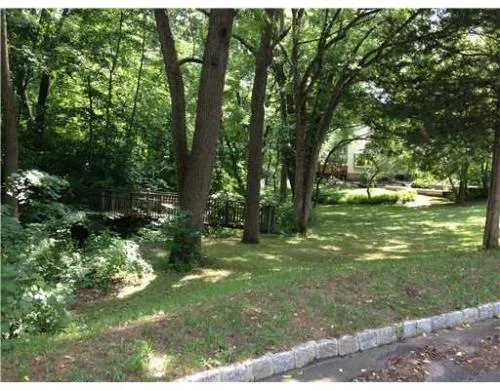
My house had a backyard: a pool, a basketball net. A shed, a fence, and a deck. The work in the backyard was never, ever done: lay this dirt, fetch these bricks, pour the chlorine, clean the shed. The earth beyond the deck sloped sharply downward, a steep, rocky path leading to a mini-jungle all our own. The trees and the foliage grew wild down there, past the trickling water for which our street was named. Dad always said he’d clean it up down there, clear out the bushes, cut away the branches. I thought about the scope of the sheer labor it would take, and wondered why he would want to approach such an undertaking. I imagined creatures living back there, ferocious and undisturbed. I thought of the deep quiet within all that green. It seemed a shame to bring noise and machete to it.
There was a swing, too. A long, long length of rope, affixed to a high tree branch, and a rusted metal bar as its base. You would straddle the rope and sit on the bar. Then, you would plant your feet in the dirt to the west side of the deck, facing the brook. Once you let go, you’d careen outwards, over the water, the rocks, the green, way up--until the arc was complete, and you’d touch down again. For years, I wouldn’t dare, watching my older cousins whoop with fear and delight as they spun away in the air, always expecting the branch to crack, the rope to snap, to watch them plummet to a grisly death. But when my fear burned away and I gripped the rope in my hands, I knew I wouldn’t fall. My toes curled into the ground, my palms clenched the dirt-worn rope, and I pushed off. Soaring, I looked down and laughed. The world was mine.