52: Chopsticks
I could have been a prodigy. Probably. My childhood is littered with the remnants of skills taught and practiced and forgotten, of hours of repetition and uniforms and rehearsals that have added up to exactly zero payoff in adulthood. Or perhaps it isn't transactional as all that. If my attempts to master an instrument or form of dance were abandoned before they could flourish, then what good have those hours been? If they did not earn me scholarships, win me tangible prizes? Have I simply proven myself uninspired and untalented in multiple areas?
I played the flute in fourth grade. I didn't know that it was called the flute - when I communicated the desire to play to my friends and family, I mimed the motion of playing and said, "I want to play the thing that goes like this" and they were like, "The flute?" and I was like, "Yeah, that." I don't remember how much it cost my parents to buy the appropriate equipment, because I was nine and I didn't have to worry about things like that. I loved being a part of the elite group that would get to leave the classroom for an hour on Tuesday afternoons for band practice. I loved my instrument, shiny and gleaming silver. I loved unpacking it, fitting the pieces together, in tandem with my fellow bandmates, seated in our band room, with our sheet music neatly placed in folders and our conductor preparing to lead our warm up. In fact, I loved absolutely everything about playing the flute besides actually playing it.
It wasn't that I was bad. I just wasn't all that good. And I didn't truly care about being good, either. I found its sound beautiful and I thought I looked wonderful playing it. Like a woodland fairy or garden nymph. But I was always out of breath. Sometimes I couldn't get my fingers to move fast enough. I despised the occasional glob of drool that would accumulate when I had been practicing for too long. I also couldn't stand our conductor. Now that I've said it twice, I feel like 'conductor' is a strong term for a teacher who leads an elementary school band, but I'm not sure of what else to call him. I found him unpleasantly sarcastic and abrasive. I disliked his beady eyes, the way he would say that Stephanie W had "the perfect lips for the flute". At nine, I didn't yet have the term 'creepy' in my lexicon, but that's how I felt about him. He was creepy.
I was terrified of messing up during practice. When someone sounded off, he would have us repeat the line, but with only one section of instruments playing, then one row, then four people, then three, et cetera, until he located the problem player. As a shy, eager-to-please, and prideful child, I found this method of correction unthinkable. At home, I would sit and practice at the dining room table, blowing ineffectively until my lips were sore and tears streamed down my cheeks. "It doesn't sound right," I would wail to my mother, and she would encourage me to continue, bless her. I can't imagine the racket I made. I soon quit band, and never looked back.
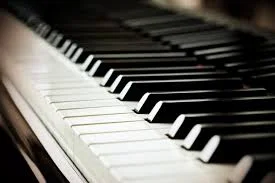
Piano. We had an old piano in our family room, with keys that I used to plink and plonk when the mood struck, quite inexpertly, probably quite annoyingly. My parents needled me into taking lessons, because every parent wants their kid to play the piano since they can't. I wish I had stuck with it when I was a kid! I thought it be fun to know how to play, not taking into account the hours and hours and hours and hours of tedious practice it would take to reach the point of being able to sit down and play a decent song. But I was ten, so I didn't worry about things like that.
Every Monday at 3:15, I had practice at my piano teacher's house. Mrs. Pendleton. She was an older lady, the mom of some boys who went to high school at my school, and from time to time I would catch a thrilling glance of one of them when they slouched into the door, backpack slung over one shoulder, the years between us elevating them to the level of all the mystery and wonder that imbued the aura of any high school kid. I was a lowly fifth grader, invisible and unworthy. Mrs. Pendleton wore incandescent muu muus, house slippers, and a face full of makeup. Frosty pink lipstick. Her polished nails clicked the keys as she demonstrated how to play a line, and I would dread the moment when she reached for the metronome, my heart quickening and palms sweating as I prayed not to mess up, not to mess up, not to mess up. She was always kind; she never made me feel inadequate, but couldn't stop comparing myself to her other students. Sometimes I would arrive too early and wait in another room for her to finish with the student before me, doing my homework and listening to the rapid, thundering chords of a classical song that sounded like it could be playing on the radio. When she would call for me, I'd come in to see a young girl barely older than myself slipping into her jacket, avoiding eye contact with me as her parent walked her out. What am I doing here, I would think, as she opened up one my music books, and directed me to begin my scales. Every-good-boy-does-fine. What was the point of this? I suck.
Getting me to practice at home was a battle. My first recital was a traumatic event. I wanted no part in it. I didn't like my dress, my hair, or my shoes. I messed up on one song, not horribly, but noticeably. I wasn't the oldest player there, but I wasn't the youngest, and there were many other students my age or younger who played much better than I did. I posed and smiled stiffly for pictures and accepted the bouquet from my parents, who were so, so proud. I hated their excitement for this hobby of mine, a hobby I wasn't good at, that I wanted to excel in but couldn't find the drive for. "Be patient with yourself," my dad would remind me, every time I banged the keys in frustration. He told me the same thing when I tried to learn how to hula hoop and failed, over and over; when I tried to play tennis and couldn't hit the damn ball. I couldn't stand the temporal gap between beginning and mastering; I craved excellence, perfection, right away, all the time. I quit the piano shortly after. I can still play like three songs, not including Chopsticks.
I danced ballet, I did tap. I was younger then: six, maybe seven. I adored my pink tights and shiny black shoes. I don't know why I stopped. I played soccer in middle school. I relished being on defense. Left fullback was my position. I would be so nervous, so incredibly nervous before every game, pulling on my shinguards with shaking hands, jaw locked with tension as we jogged onto the field. Each time, I was positive that I would freeze up in the middle of the game, completely forget how to kick, how to run, just stand there mute and then have to endure my team's ire, Ms. McKay's furious screams. But then the whistle would blow and the ball would land and the other team's forward would advance and there I was, running, running, I was so fast, I was usually bigger than the other girl, and I was meaner, and I wouldn't stop running until I had wrestled the ball away from her legs and feet and rocketed it back down the field to our team, and sometimes they would trip and fall but I didn't care, and I basked in the "YES, CARLA! GOOD!" hollered from our bench, and I'd run back to my post and wait, pacing, watching, so proud, so sure of my place on that field, in that moment. We were undefeated two years running. I was a starting player. My trophies accumulated. I was good at this. I felt, finally, that I was good at this.
In high school, I tried out for the soccer team and got cut.
I don't know what this was all for. Maybe I learned discipline, or the value of hard work, or the importance of commitment, or some other feel-good platitude that secondary school teachers and college admissions officers live for. A few years ago I sat in a corner of Barnes & Noble and read Battle Hymn of the Tiger Mother and wondered what my life would be like if I had been forced, despite every protestation, to stick with all of the extracurricular activities I'd briefly dabbled in. Would I be making six figures by now? Would I have already met Oprah, or at least Ellen? Is it better to be well-rounded or singularly accomplished? I busted my ass in high school trying to over-achieve, to be a part of every leadership summit and conference, to impress all of my teachers. And I went to my safety school, for which I am still paying off student loans. Did I go about this all wrong, or does my disillusionment have merit? And, indeed, how disillusioned can I actually be, when I now have a wonderful husband and incredible daughter, and live in the greatest city in the world? (In the greatest city in the world?)
Either way, in a few short years, Eve is probably going to start piano lessons. Because boy, how I wish I had stuck with it when I was a kid...